
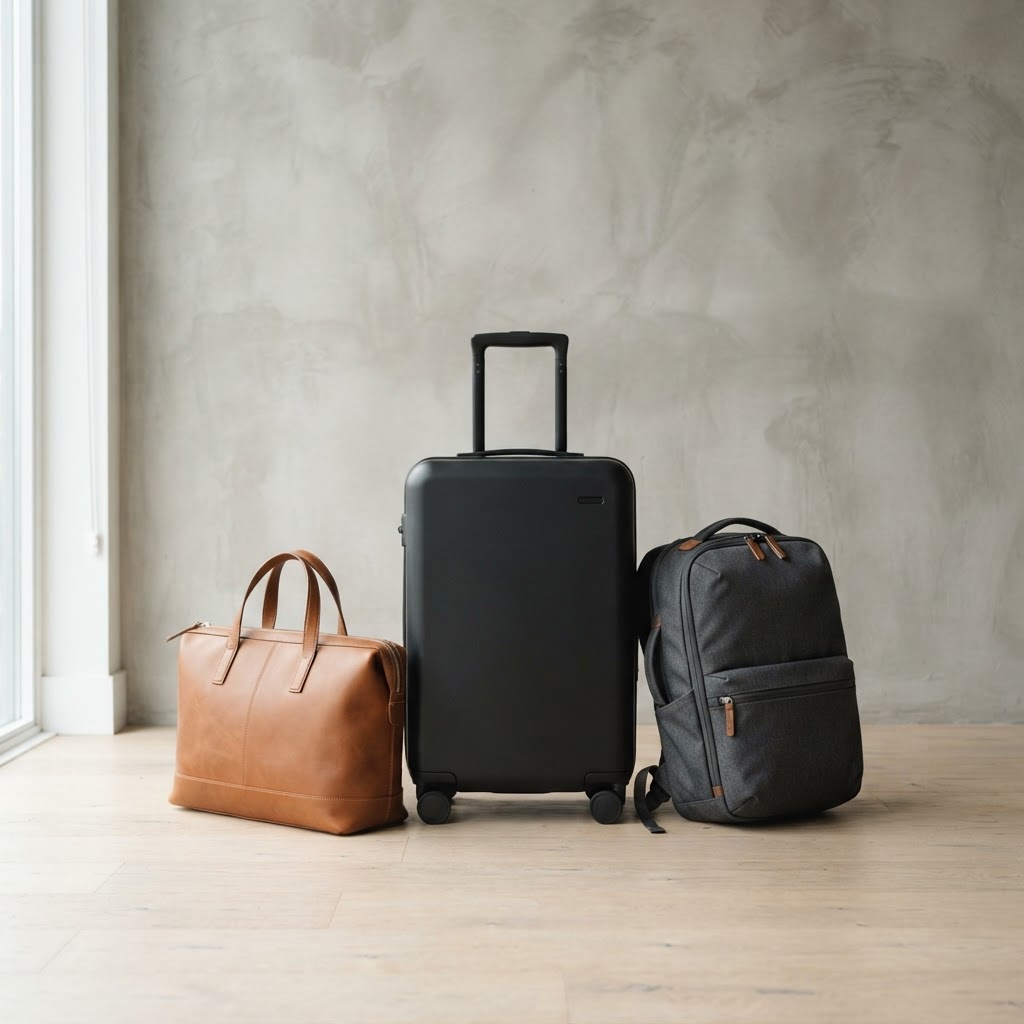
Choosing the right luggage is a balance between utility, longevity, and your personal travel style. Whether you are prepping for a cross-country flight or an daily commute, your choice of bag impacts how you pack and move throughout your day. Navigating the extensive options within bags and luggage requires a clear understanding of your specific needs, such as weight restrictions, space requirements, and material durability. By focusing on quality construction and functional design, you ensure that your investment lasts for years rather than just a single season.
Evaluating Luggage Material and Build Quality
The foundation of any good bag is its construction. Hard-shell suitcases often provide superior protection for delicate contents, using materials like polycarbonate or aluminum to resist impact. If you are a frequent flier, look for features like 360-degree spinner wheels and telescopic handles that have reinforced lock mechanisms. Conversely, soft-shell bags, such as those often found at DELSEY Paris, offer the advantage of external pockets for quick-access items and a bit of flexibility if you tend to overpack.
For backpacks and smaller travel items, material weight and water resistance are paramount. Look for denier ratings that indicate the density of the fabric; a higher number generally means better abrasion resistance. If your bag will see heavy outdoor use, verify that zippers are YKK or equivalent and that seams are double-stitched. These small details prevent catastrophic failures while you are mid-transit.
Optimizing Your Packing Strategy
How you organize your belongings often depends on the architecture of the bag itself. Many travelers find that internal compression systems are essential for maximizing limited space. If you frequently travel for business, prioritize bags that feature dedicated, padded compartments for your laptop or tablet to keep technology secure. For casual trips, look for modular designs where you can separate dirty laundry or shoes from your clean clothes. By utilizing the available space efficiently, you avoid the need for multiple bags, which simplifies your movement through transit hubs.
You can often find innovative organizational features across diverse retailers. For those looking for specialized accessories or unique garment storage, browsing options at POPSY CLOTHING can provide a different perspective on how to pack items effectively. Remember that the lightest bag is not always the best; a slightly heavier bag with a reinforced frame will often hold its shape better, making it easier to pull through a crowded airport.
The Strategic Approach to Shopping for Deals
The marketplace for travel gear is highly dynamic, and timing your purchase is just as important as choosing the right model. Many shoppers make the mistake of waiting until the week of their trip to purchase their luggage, which limits their options and keeps them from researching the best value. Instead, monitor seasonal shifts in inventory to identify when new collections are arriving. You can stay ahead by frequently visiting our featured offers page to see if your desired brand or style is currently seeing a price adjustment.
Before making a final decision, always cross-reference the product specifications with your airline requirements. A common mistake is assuming that all "carry-on" sizes are identical across different carriers. Always measure the dimensions provided by the manufacturer against the baggage policy of the airlines you fly most frequently. When you find a piece that meets both your functional requirements and your budget, check our coupon codes to see if you can apply an extra reduction at checkout. For luxury travelers, retailers like Portmantos Inc. provide high-end options that are worth the investment if you travel consistently and require superior gear longevity.
Common Mistakes to Avoid
One of the biggest pitfalls in purchasing luggage is focusing purely on aesthetics. While a stylish bag is nice, a vibrant color that scuffs easily or a handle that feels flimsy under load will become a frustration during travel. Avoid bags with intricate external decorations that could snag on conveyor belts or terminal equipment. Instead, prioritize reliability and ease of use. Always test the zippers to ensure they glide smoothly without catching on the inner lining, as this is a frequent point of failure. By focusing on these core elements, you will build a collection of gear that makes every journey more efficient and enjoyable.
Frequently asked questions
How do I choose between a hard-shell and soft-shell suitcase?
Hard-shell suitcases provide better protection for fragile items and are generally easier to clean. Soft-shell bags offer more flexibility, allowing you to expand the capacity slightly and providing external pockets for quick access to travel documents.
What should I look for in a carry-on backpack?
Prioritize comfort through adjustable, padded shoulder straps and a breathable back panel. Ensure the bag fits within your airline's specific size requirements and features a dedicated, secure compartment for your electronic devices.
Are expensive suitcases actually better quality?
Higher-priced luggage often uses more durable materials like high-grade polycarbonate or ballistic nylon, along with superior hardware like wheels and zippers. While price doesn't guarantee perfection, reputable brands usually offer better longevity and repairability.
Why do some suitcases have four wheels while others have two?
Four-wheel spinner luggage offers 360-degree mobility, making it much easier to navigate through crowded terminals by gliding alongside you. Two-wheel upright bags are typically more durable on uneven surfaces like cobblestone streets and offer more interior packing space.
How often should I replace my travel bags?
There is no set expiration date for luggage, but you should inspect it after every trip. Look for signs of fabric tearing, wheel wobble, or broken zipper teeth. If a bag no longer protects your belongings or is physically difficult to maneuver, it is time to upgrade.


