
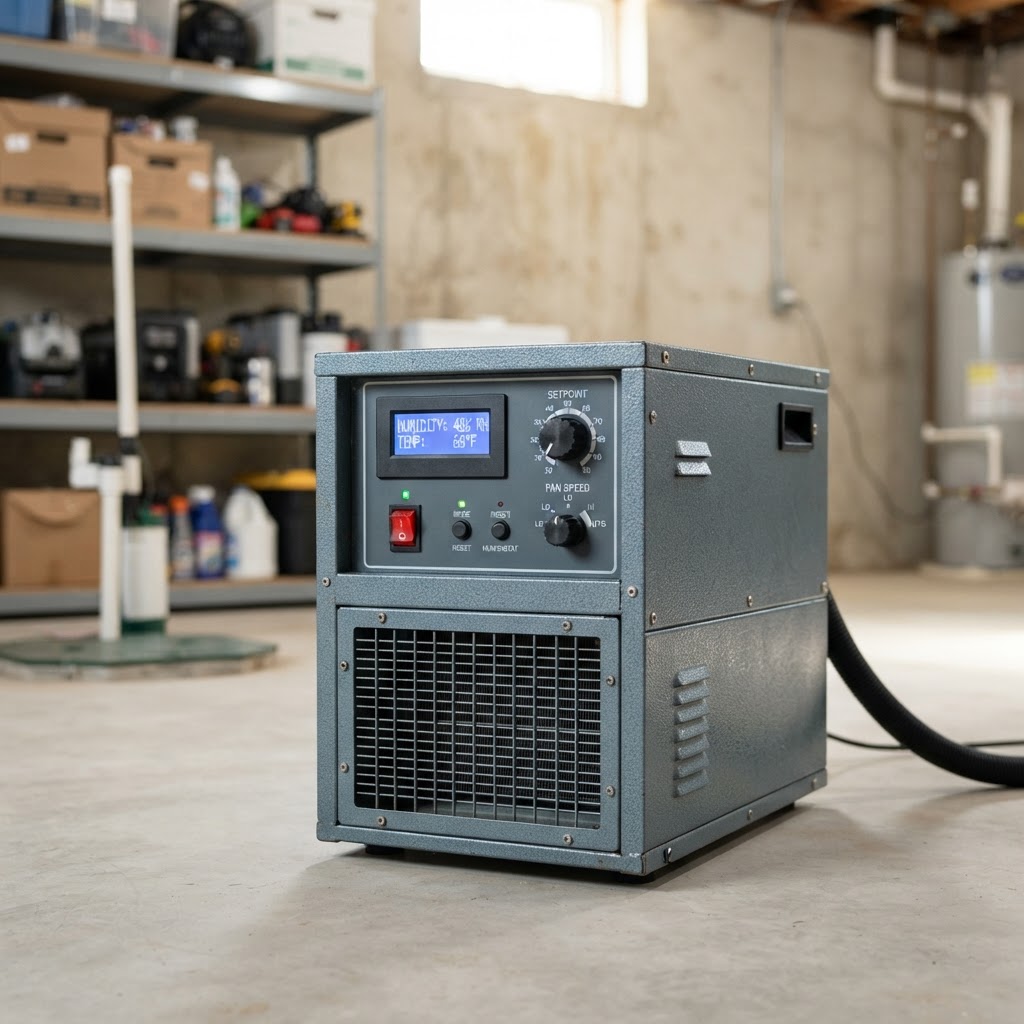
Managing moisture in large-scale areas like warehouses, basements, and agricultural grow rooms requires more than a standard household unit. Excess humidity leads to structural decay, mold growth, and damaged inventory. When addressing these environments, industrial-grade equipment is a necessity rather than a luxury. You can explore a variety of these heavy-duty options at Argendon Crawlspace & commercial dehumidifier, which focuses on providing equipment capable of handling high-volume moisture removal.
Understanding Your Moisture Capacity Needs
Before purchasing, calculate the square footage and the specific volume of the area you intend to climate control. Industrial dehumidifiers are rated by their daily moisture removal capacity, usually measured in pints per day. A common mistake is buying a unit that is too small for the space, which forces the machine to run continuously, wasting energy and accelerating wear on the internal components.
Consider the temperature of your environment. Crawl spaces are often significantly cooler than living areas, which can cause standard machines to freeze up. You need a device with an automatic defrost function. If you are browsing the latest hardware releases, always look for technical specifications regarding operational temperature ranges. Matching the unit’s capabilities to your environmental baseline is the most critical step in protecting your infrastructure from humidity-related damage.
The Importance of Accessory Compatibility
The core machine is only half the battle. Effective moisture control requires a holistic system. When shopping at retailers like Argendon Crawlspace & commercial dehumidifier, examine the availability of necessary accessories. These include items like specialized hanging kits for elevated crawl space installation, high-quality vapor barriers that prevent soil moisture from rising, and advanced filtration systems that capture dust or contaminants.
Using the wrong accessories can compromise the performance of even the most expensive industrial dehumidifier. For instance, if your ducting is poorly sealed, the unit will struggle to pull moisture from the entire zone. Always ensure that the filters provided with your unit are compatible with the air quality needs of your space, especially if you are managing a sensitive environment like a storage room for electronics or a controlled agricultural setting.
Strategizing Your Purchase Timeline
Big-ticket hardware investments require planning. Instead of rushing a purchase when you notice a damp patch, monitor the market for timing your acquisition. Many shoppers prefer to browse current promotional opportunities before finalizing their cart. When evaluating potential purchases, look beyond the initial price tag. Analyze the long-term energy costs, the warranty coverage provided by the manufacturer, and the ease of sourcing replacement parts or filters.
Don't fall for the trap of buying on impulse. Take the time to read the product specifications provided by the manufacturer. Compare the drainage options—some units require a manual bucket dump, while others offer continuous drainage via a hose. If the unit is located in a hard-to-reach crawl space, a continuous gravity drain or an integrated condensate pump is essentially mandatory. Neglecting these practical details will result in frequent manual interventions, which is often why users eventually abandon their humidity control efforts entirely.
Avoiding Common Buying Mistakes
The most frequent errors occur when buyers ignore the airflow requirements of the unit. Dehumidifiers work by circulating air; if the unit is tucked into a tight corner or blocked by storage boxes, its effectiveness drops exponentially. Before you check out, verify the dimensions of the unit and the clearance required for intake and exhaust. If your space is particularly cramped, consider looking for slim-profile models designed for tight configurations.
Another factor is noise level. If your workspace is adjacent to an office or a living area, the decibel rating matters. Industrial units are louder than consumer models. Check the manufacturer's provided sound levels if the proximity of the unit to human workspaces is a concern. Finally, refer back to your current purchase roadmap to ensure you have accounted for everything, including necessary electrical adapters or heavy-duty extension cords, to get your system up and running immediately upon delivery.
Investing in the right climate control equipment is a long-term strategy for home and property maintenance. By focusing on capacity, accessory compatibility, and proper placement, you will ensure that your investment effectively mitigates moisture issues for years to come.
Frequently asked questions
How do I determine the right pint capacity for my crawl space?
Capacity is determined by both the square footage of your space and the severity of the moisture issue. For a typical crawl space, consider a unit that can handle the full volume of air in that space, keeping in mind that high-moisture environments require higher pint-per-day ratings to be effective.
Do I really need a professional-grade unit for a residential crawl space?
Yes, standard household dehumidifiers often fail in crawl spaces because they are not designed to operate in the cool, damp, and confined conditions found beneath a home. Industrial units feature more durable components, better moisture removal technology for lower temperatures, and often include features like automatic restart and pump systems.
What role do vapor barriers play in dehumidification?
Vapor barriers are essential because they act as a seal between the soil and the crawl space air. By preventing moisture from migrating up from the ground, they significantly reduce the workload on your dehumidifier, making the overall system more efficient and long-lasting.
How often should I change the filter on an industrial dehumidifier?
Frequency depends on the cleanliness of your environment and how often the unit runs. In dusty crawl spaces, checking the filter once a month is standard practice. If the air is clean, you may be able to go three months between replacements, but always defer to the manufacturer's manual.
Why is continuous drainage important?
Continuous drainage removes the need for you to manually empty a water collection tank, which is prone to overflowing. For units located in crawl spaces or basements, a gravity-fed or pump-assisted drainage system is essential for set-it-and-forget-it maintenance.


