
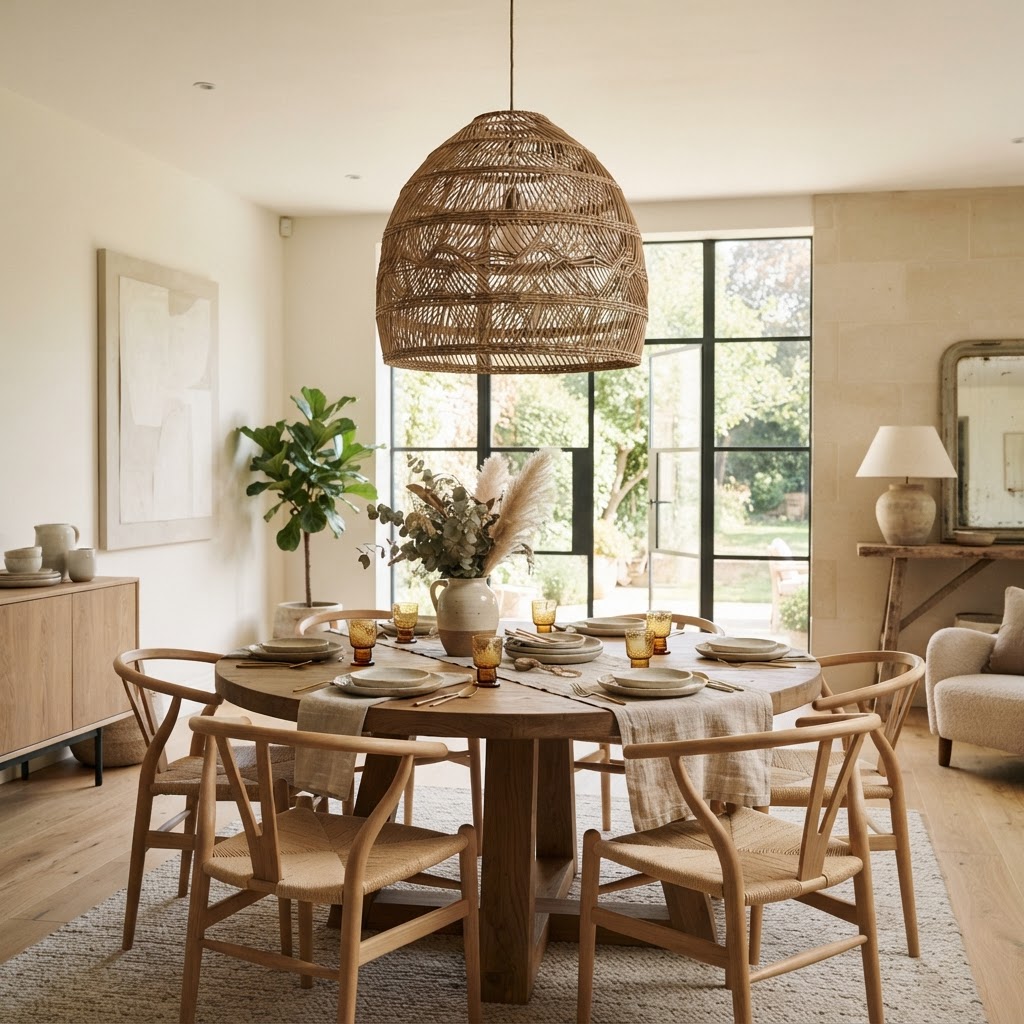
Choosing the right lighting is often the final piece of the puzzle when curating a cohesive home environment. Organic woven lighting, characterized by natural materials like rattan, bamboo, and seagrass, has become a staple for those looking to soften modern interiors. These fixtures provide a unique texture that bridges the gap between structured architectural elements and the natural world. If you are exploring options for your home, you can find a curated collection at Rowabi that focuses on these handcrafted styles.
Understanding Scale and Proportions
One of the most common mistakes in lighting design is selecting a fixture that is too small for the room or the furniture beneath it. A woven pendant acts as a visual anchor; if it is undersized, the room can feel disjointed or unfinished. Before committing to a piece, measure the length and width of your table or kitchen island. A good rule of thumb is that the light fixture should generally be about one-third to one-half the width of the table it illuminates. Because organic woven designs are often airy and light, they can sometimes handle larger silhouettes without overwhelming the space, unlike heavy metal fixtures.
When you browse for lighting and electrical solutions, pay close attention to the dimensions provided. Do not rely solely on photos, as they can sometimes obscure the true scale of the piece. If you are placing a lamp in a high-traffic area, also ensure you have adequate clearance for movement. A low-hanging pendant in a small room can feel intrusive, so consider the height of your ceiling as a critical variable in your decision-making process.
Texture and Light Diffusion
The primary appeal of woven lighting is the way it interacts with light. The gaps between the woven fibers cast intricate shadows and soft patterns on the surrounding walls and ceilings. This effect, often called light diffusion, changes the entire mood of a space. When shopping for these items, consider the tightness of the weave. A very tight weave will project more focused, downward light, making it ideal for tasks like dining or reading. A loose, open weave allows for ambient glow that fills the room with warm, diffused light, perfect for bedrooms or living areas.
You can see how different designers approach these materials by looking at featured collections that highlight artisans' work. Think about the existing textures in your room. If you have a leather sofa, a linen rug, or hardwood floors, an organic fixture will likely complement these surfaces. Avoid mixing too many competing wood tones; instead, try to match or subtly contrast the material hue of the shade with the wood tones already present in your furniture.
Placement and Functional Requirements
Before installing your new fixture, think about the primary function of the space. In a kitchen, you might need brightness for food preparation, so an open-weave design might be better paired with a high-lumen bulb. In a bedroom, you may want a more closed, softer shade to encourage relaxation. Never underestimate the importance of the color temperature of your light bulbs when working with natural materials. Warmer bulbs (2700K to 3000K) tend to bring out the earthy, golden tones of rattan and wicker, making the piece feel more integrated into the room.
If you are looking for ways to plan your home updates, you might find it helpful to check out resources on current shopping guides to see how to organize your procurement. It is also wise to check the hardware requirements before you buy. Many natural fiber fixtures are lightweight, but some have substantial internal frames that require proper mounting. Ensure the canopy and wiring are compatible with your existing ceiling box to avoid unnecessary installation headaches.
Maintenance and Long-Term Care
Natural materials react to their environment. Over time, dust can accumulate in the intricate weaves of a pendant or lampshade. The best way to maintain these pieces is a regular, gentle dusting with a soft-bristled brush or a compressed air canister. Avoid using harsh chemical cleaners, as they can discolor the natural fibers or damage the protective finish that many designers apply to ensure longevity. By following these basic care steps, your organic fixtures can remain a beautiful feature in your home for years to come.
If you are still finalizing your interior plans, consider looking for inspiration in seasonal shopping guides to see how different styles can be integrated throughout the year. Whether you are aiming for a coastal retreat look or a modern bohemian aesthetic, the right woven lamp provides a grounding element that brings comfort and character to any room in the house.
Frequently asked questions
How do I determine the right size for a woven pendant light?
Measure the width of the table or island the light will hang over. A common guideline is to choose a fixture that is roughly one-third to one-half the width of the surface to ensure proper visual balance.
Will a woven lamp provide enough light for a dining room?
It depends on the weave density. Open-weave shades allow more light to pass through for ambient illumination, while tighter weaves focus light downward. You can adjust the brightness by selecting the appropriate lumen output for your bulbs.
Can organic woven lights work in a modern apartment?
Yes, they are excellent for adding warmth to modern spaces. The organic texture provides a necessary contrast to the clean lines and hard surfaces often found in contemporary interior design.
How should I clean my rattan or bamboo lighting fixtures?
Use a soft brush, a microfiber cloth, or a can of compressed air to gently remove dust from the crevices. Avoid chemical sprays or water-heavy cleaning methods, which could warp or discolor natural fibers.
What bulb color temperature works best with natural woven shades?
Warm white bulbs, typically in the 2700K to 3000K range, are usually the best choice. This color temperature enhances the natural golden and earthy tones of materials like rattan and seagrass.


